I designed this for fun to explore how to make ratios and rates more exciting for 6th grade math students. This idea was inspired by conversations with my middle school students a few years ago. It stuck with me, and so here’s what I would build for them if I were still in the classroom. I designed the learning sequence, practice, and feedback, then built the playable prototype with AI tools. It’s a self-paced browser activity for independent or classroom use. I also created a two-day classroom package to go with it: a teacher guide, an illustrated story and slide deck, and student handouts.
Try the escape room
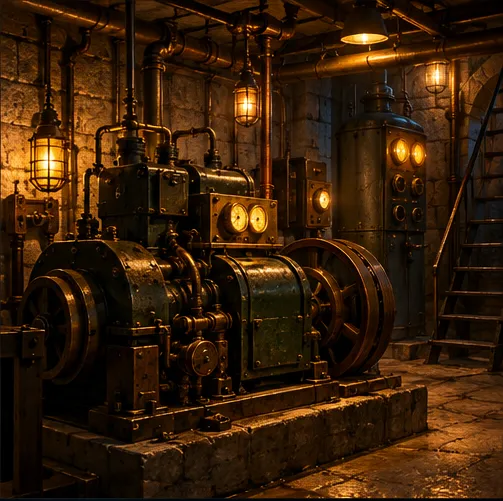
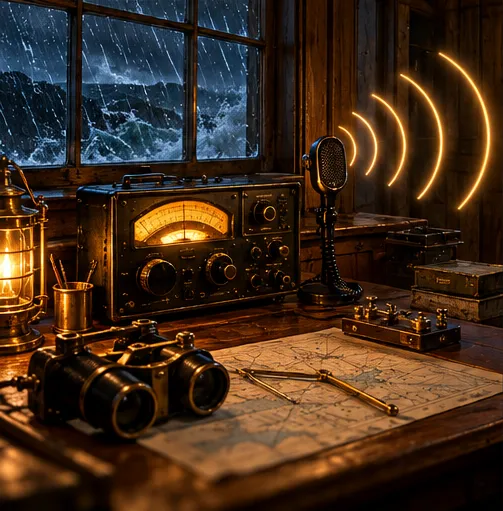
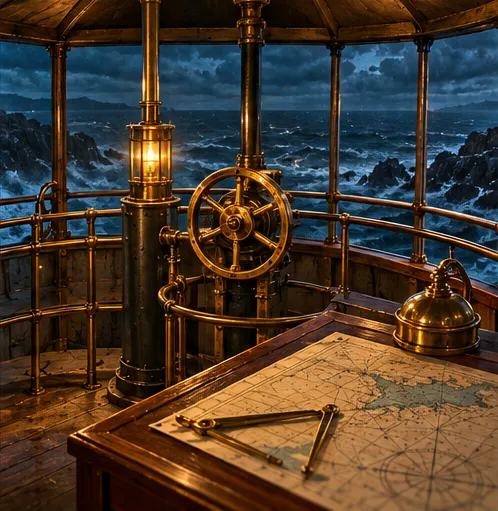
The images are concept mockups made for this proof of concept.
Two days at Gull Point
Here’s how a teacher would bring the escape room into class. I modeled the teacher guide on the Engineering is Elementary guides from the Museum of Science, Boston: a story sets up the problem, partners practice the tools, then they put those tools to work and talk about what they learned.
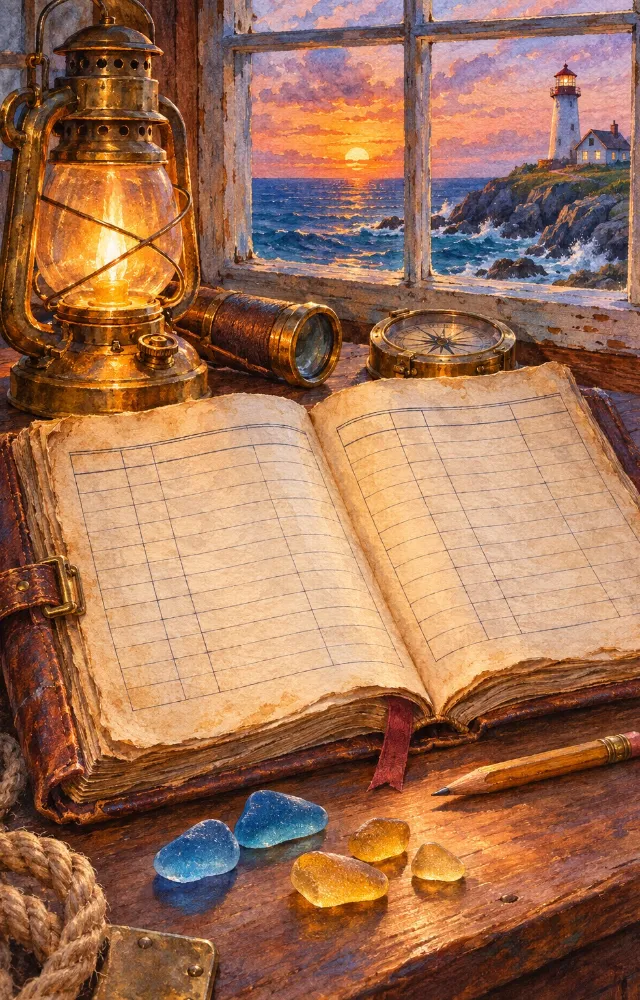
The Keeper’s Logbook
An illustrated short story told across eight slides. Sixth grader Mira visits her grandfather Pop, the keeper of Gull Point Light. As he shows her the lens, his logbook, the generator and the radio, students hear each math word as it comes up. Then a storm knocks out the light, and students become Mira’s crew. Like the storybooks in Engineering is Elementary, it sets up the problem, but it’s written with sixth graders in mind.
 Scene 1Gull PointMira meets the beacon her grandfather has kept for thirty years.beaconreef
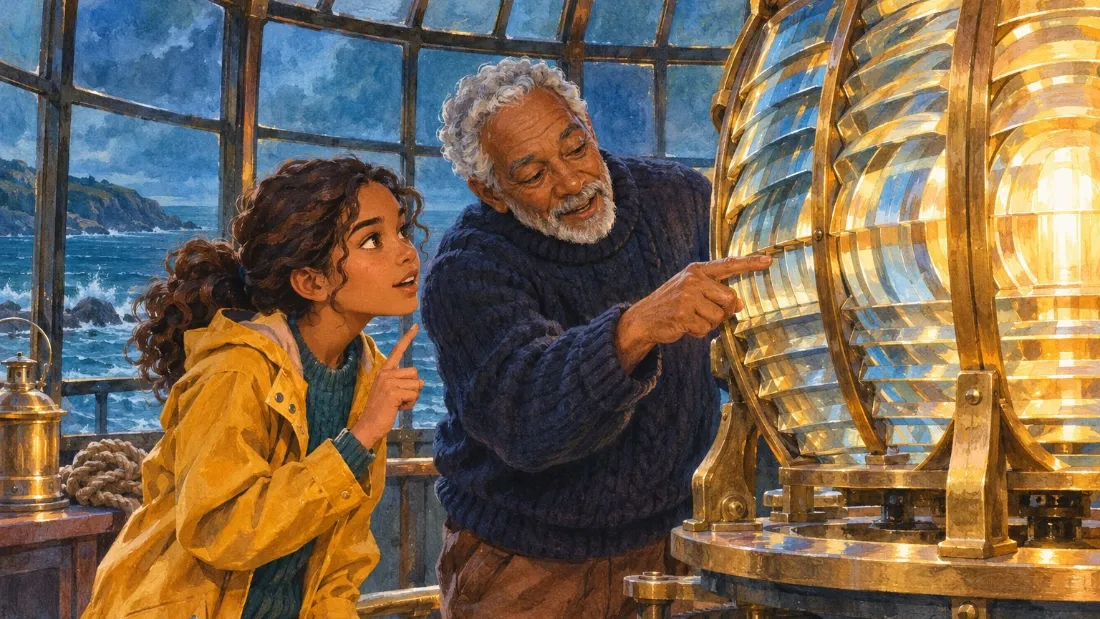 Scene 2The Lantern RoomThe lens has its own pattern: 2 blue for every 3 gold.ratio
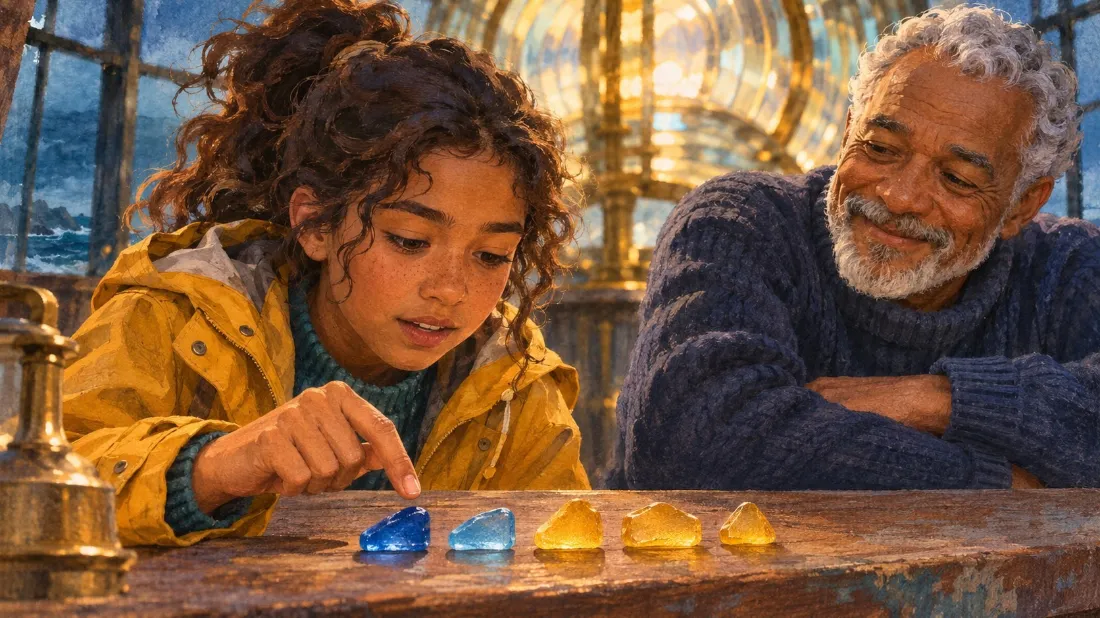 Scene 3Parts and the WholeFive pieces of sea glass show two ways to compare.part-to-partpart-to-whole
 Scene 4The Keeper’s LogbookPop records every pattern that works.ratio tableequivalent ratios
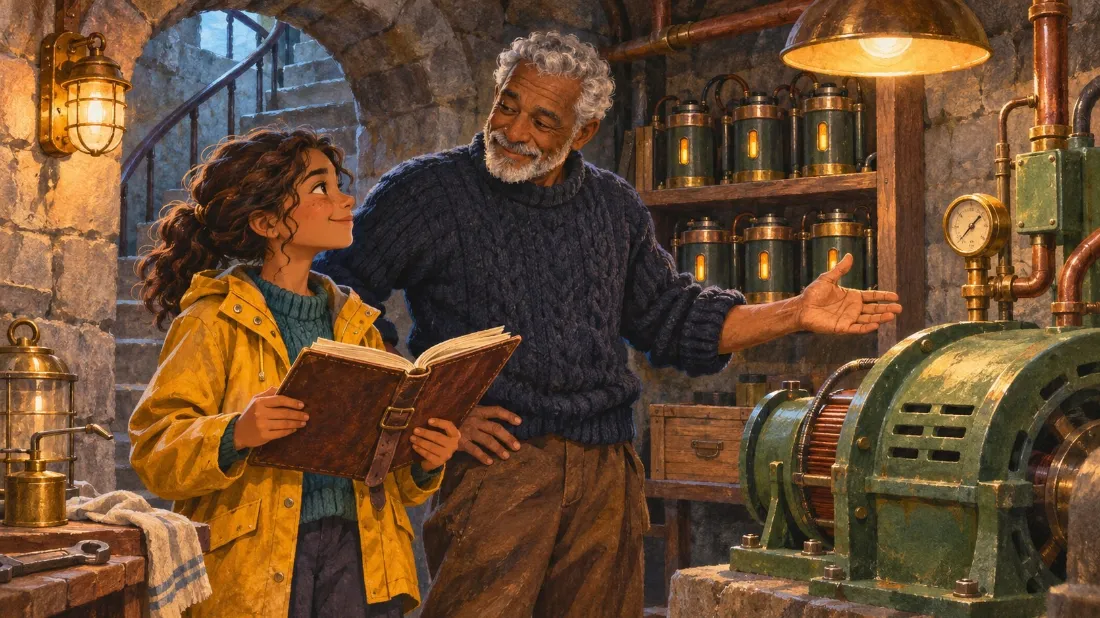 Scene 5The Generator RoomPacks and flashes always stay in the same ratio.ratio table
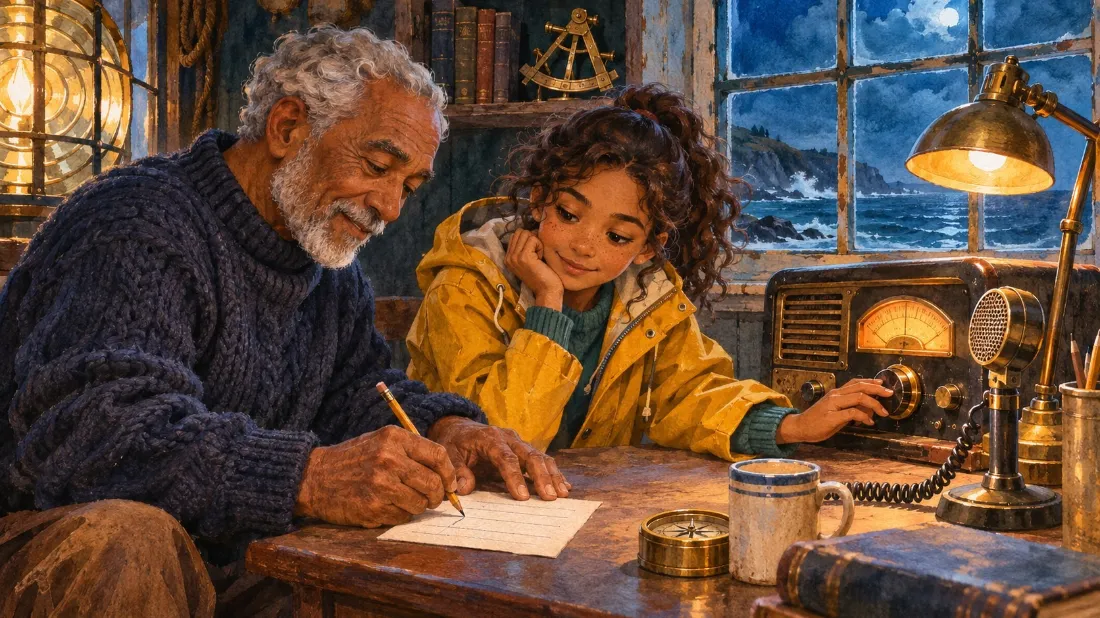 Scene 6The Radio RoomBeeps per minute, sketched on two lines.rateunit ratedouble number line
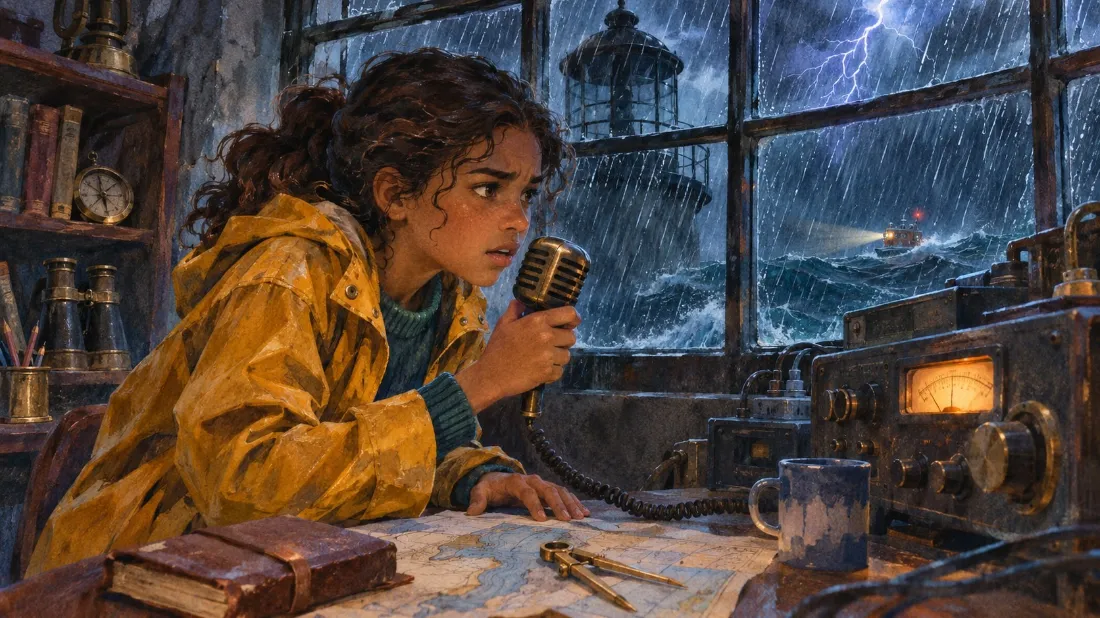 Scene 7The StormLightning knocks out the light as a rescue boat heads for the reef.
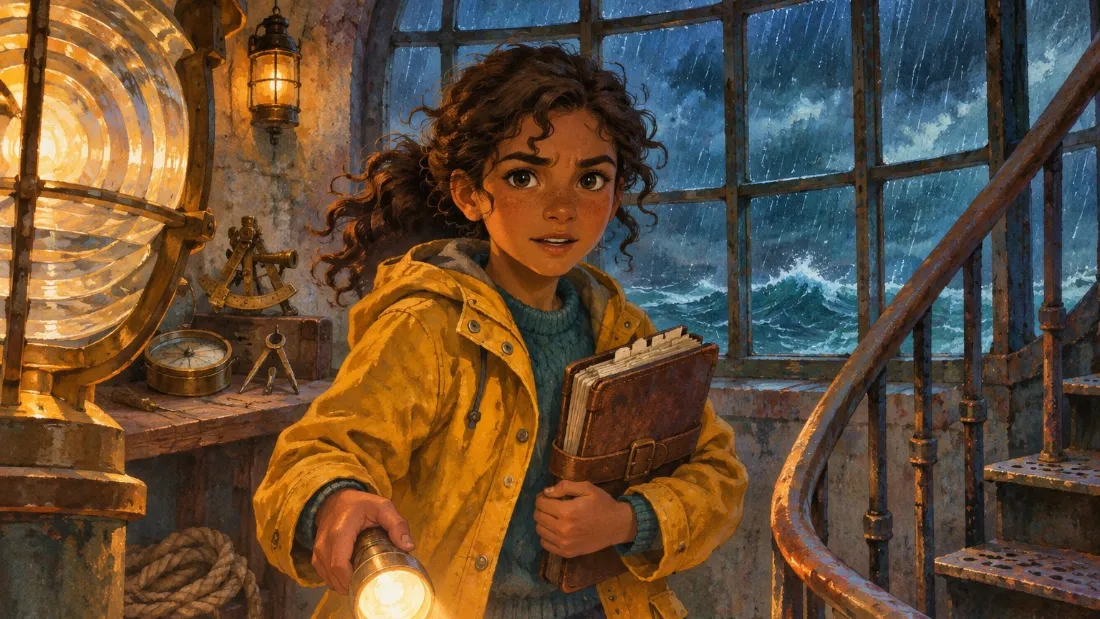 Scene 8Mira’s Crew“She needed a crew. That’s where you come in.”
Where it fits
- Grade and timing
- Grade 6, early in the ratio unit, usually in the fall. After ratio tables, before percents.
- Standards
- CCSS 6.RP.A.1, 6.RP.A.2, 6.RP.A.3a and 6.RP.A.3b
- Schedule
- Two days on a block schedule, or four 45-minute periods
Take it to class
Design decisions to support learning
- Make the math visible.Learners build the lens ratio with tiles, extend a ratio table, and fill in a radio log to find the beeps in one minute.
- Offer support without adding pressure.Every room offers an optional three-part practice and three hints that move from a guiding question to a concrete next step.
- Make room for learners to explain.In the signal gallery, learners set each dial from their logbook clues, test the signal, and finish a sentence with their own numbers to explain why it works.
- Let a story teach the words.The Keeper’s Logbook introduces the vocabulary and the mission on Day 1, so the escape room itself can be almost all play time.
- Plan for a real school day.Each lesson fits one class period. Pairs who finish early start designing their own room, and pairs who run out of time finish in the first few minutes of the next lesson.
- Give every learner a way in.Driver and Navigator roles, free hints, Paper Rooms for students who can’t use the game, a make-up plan for absent students, and notes for adapting to Grades 5 and 7.
- Debrief the thinking, not the plot.Lesson 3 compares the strategies students used and the mistakes they actually made, like “14 flashes,” instead of retelling the game.
How I’d evaluate its impact
Before the escape room, learners answer two quick questions about lanterns. Afterward, they answer the same two questions with new numbers. Each time, they also say how sure they are. Comparing the rounds shows whether learners can use ratios and rates on their own, and whether their confidence matches their skill. In class, the after round is the Lantern Check in Lesson 3 (handout 3-3). Step through three sample learners below.
What the activity would track
The before-and-after check shows whether learners learned. Data from the escape room itself can help show where to improve it.
Want the details?
How I created this activity
Light the Beacon is a two-day unit for Grade 6 math. Along with the escape room, it includes everything a teacher needs to run it in class: a teacher guide, a slide deck with an illustrated story, and printable student handouts.
I designed the learning experience: the story, the math, the support for different learners, and the plan for teaching it in a real classroom. Then I used AI tools to build it:
- ChatGPT for the illustrations and scene art
- Claude, Claude Design and Claude Code for the escape room, the teacher materials and the student handouts
Room by room
Built on Common Core 6.RP.A.3 ↗, mainly 3a (equivalent ratios and ratio tables) and 3b (unit rates). Each room pairs one part of the standard with a hands-on choice, an optional practice round, three hints, and feedback for each kind of mistake.
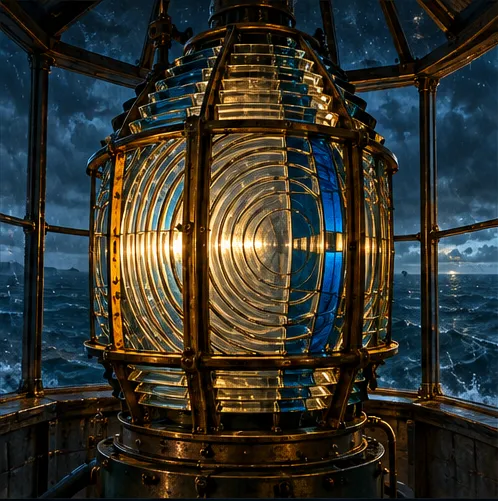
- What is the ratio of blue to gold? How many lights are in one group of that ratio?
- The lens has 20 spots. How many groups of 5 is that?
- Four groups of 2 blue and 3 gold is how many of each? The 4 stuck gold panels count too.
In every room, learners can type answers instead of turning the dials.
From standard to activityHow Common Core 6.RP.A.3 maps to essential questions, “I can” goals, and rooms
Not covered: plotting ratio pairs (part of 3a), percents (3c), and unit conversions (3d).